Because a pastor’s opportunity to opt out of Social Security is so unique, many Social Security employees don’t understand the law surrounding it. Unfortunately, this results in pastors being denied benefits that are rightfully theirs. This is what you can do to appeal the decision if it happens to you.
Ministry or Money?
This is a guest post by Joe Floris. With over 20 years of experience in full-time church ministry, Joe currently serves as the teaching pastor at Community Alliance Church in Butler, PA. His passion for both personal and pastoral finances has grown alongside his calling to shepherd others in their financial journeys.
If you are reading this, it is likely you are a pastor. Which means you probably you have been through the candidating process at a church. You meet people. Eat food. Answer questions. Eat food. Ask questions. Eat food. Give a sermon. Eat… well, you get it. Eventually, the tricky topic of pay comes up. That was where I found myself newly married, in my late-20’s, at the end of the interview process for a local church staff position. The church offered me the job, but my number crunching showed it would take some gymnastics to make the salary meet our budget. Timidly, I asked the Senior Pastor if there was any way to stretch a little further with the offer, and he graciously explained there just wasn’t. My wife and I prayed about it and ultimately decided to accept the position. It was so long ago I don’t remember the amount but I clearly remember calling the pastor to accept. With noticeable relief, he said, “I’m grateful you chose ministry over money.”
Ministry or Money?
Is it a choice? Have you ever felt like there is a game of tug-of-war between these two words and you are the rope? While some try to caricature all pastors based on a few “rich preacher types”, 99.9% of us aren’t like that. You didn’t enter ministry so you could afford a closet full of $500 sneakers or a private jet. But you also don’t want to ask your spouse to live in a van down by the river. My guess is if you are reading a blog like The Pastor’s Wallet, you have spent some time contending with this tension. I know I have, and I would like to offer 5 insights I have discovered along the way.
Don’t Bear the Burden Alone
By the time a pastor shows up day one at their first ministry position, they have already done a lot of choosing ministry over money. Most churches expect their pastor to at least have a four-year ministry degree and often an MDiv as well. The most recent studies claim MDiv students are graduating with an average of $55,000 in student debt. While most ministry schools strive to make education affordable, they are prioritizing money enough to remain in the black financially even if it leaves their graduates significantly in the red. The same is true for a church. If a church believes it can’t afford a more robust pastoral package, that may be true—but it’s still a way of saying there is a point where we value our money over your ministry. If it can be necessary for an organization to decide “This is the most we can spend on your ministry”, why should it be offensive for a pastor to decide, “This is the least amount for which I can offer my ministry”? Pastors shouldn’t be expected to always choose ministry over money so others can choose money over ministry. The burden of balancing living by faith and living by facts when it comes to money is for both churches and pastors to bear.
Beware of Greed
Pastors are the most generous people I know! They aren’t greedy, at least not the way we normally think about greed. Which is why we all need a warning from time to time. “Beware of greed” is a quote from Jesus in Luke 12. The full quote is, “Beware, and be on your guard against every form of greed” (Luke 12:15 NIV). It comes right before Jesus tells a story about a rich farmer who gets a bumper crop, plans to build bigger barns, and dies. Very uplifting. The interesting thing is the rich farmer doesn’t fit the typical description of greedy. He works hard and develops a long-term savings plan. He isn’t out buying fancy sandals and designer goats. Hence Jesus’ warning about every form of greed. Greed is more than wrongly desiring money. It is also wrongly desiring feelings money can provide. What money connected feeling might a pastor desire? Feeling better than others. Think about it. Money is highly valued in the earthly kingdom and those who are rich have a tendency to think they are better than others. James warns about this. But, in Jesus’ kingdom, sacrifice has an extremely high value. What better way to have a huge sacrifice income than to choose a vocation with a limited money income – like ministry? Pastors, who are rich in sacrifice, must beware of allowing their richness to trick them into believing they are inherently better than others who sacrifice less. It is obvious greed to think, “I need to have more money so I can feel better about myself compared to others.” It is sneaky greed to think, “I need to have less money so I can feel better about myself compared to others.” Either way, though, it’s greed.
Boring Provision
God always provides, but sometimes it’s unnoticed because it appears boring. Remember Exodus 16 when God began providing miraculous manna for the Israelites? Just when they thought they would starve, God’s just-in-time provision must have been incredible! Many of us have stories of God’s miraculous, just-in-time provision. A surprise inheritance or bags of groceries anonymously left at your door. In these times, it can really feel like God provides! But think about Exodus 16:35, “The sons of Israel at the manna forty years.” Forty years of the same old manna had to be mind-numbing… and tongue-numbing. No one woke up saying, “Can you believe it? Manna!”, yet it was still God’s provision. For us pastors, God also provides in some boring ways that can have a powerful impact on our finances. One is through special rules for pastors offering incredible savings. Don’t overlook powerful opportunities like housing allowances, HSA’s and 403b’s. Ignoring them because they sound boring or complicated is rejecting God’s provision just as much as turning down an envelope of cash. Another example of God’s boring provision is forcing you to develop dollar skills rather than giving you more dollar bills. Fine – it’s cheesy, but go with me here. Living on a limited income, as many pastors do, forces you to get better at handling money which often leads to having more money. Living on a pastor’s income requires cultivating skills like budgeting, expense tracking, saving and more. The long-term impact of these skills is far greater than just getting a bigger paycheck. And, that is God’s boring but powerful provision.
Before You Need It
I remember the first raise I got as a pastor. Actually, I should say, I remember how I felt – guilty. I was a single 23-year-old, living with a roommate and spending $200 a month on rent. I drove an old paid-off Honda and wore thrift store clothes. Is my glamorous life making you jealous? My biggest bill was student loans, and I just saved the extra. Even though I didn’t make a lot of money, I didn’t spend a lot of money. In a conversation with my dad, I confessed, “I feel guilty taking the raise because I just don’t need it.” His wise reply stuck with me, “No, you just don’t need it yet. You better take it, because one day you’re gonna need it.” Over time, I’ve realized needing money and making money don’t always occur simultaneously. In times when you earn more from your ministry than you immediately need, it could be God preparing you financially for the future He has for you. God may give you what you make now to make up for what you won’t make later. How you manage money today might determine how available you are to God tomorrow. Maybe you are in a season of experiencing God’s financial abundance from your ministry. Thank Him for what He has given you. But, don’t forget to ask Him what He has given it to you for.
More Than Money
Money is a tool for accomplishing goals, not a goal itself. We need to make money from ministry to accomplish goals like buying things needed to live. The days of bartering sermons for cartons of eggs are over (if they ever existed at all). Yet, there are many ways ministry allows us to realize important goals in life without needing money for it. It could be the goal of using your gifts and abilities for a deeper purpose. Or sharing in the joys and sorrows of a relational community. Maybe ministry offers you the more flexible daytime schedule you really want so you can be present with family. Or preparing sermons is a way feed your hunger to learn. Ministry means you’ll definitely cross paths with some “odd” people (trying to be nice here), but you will also meet the most sincere, humble, inspiring people humanity has to offer. And you will certainly have wild and crazy stories to tell… one day… in a town far far away. The point is there are lots of folks with lots of money who have none of these things. Ministry should offer the money we need to live, but it is important to remember, it offers much more than that.
How Churches Can Help Pastors Catch Up on Retirement Savings
Paul McWilliams is a pastor’s kid turned financial advisor specializing in helping pastors and churches make wise financial decisions that align with their mission.
Many pastors spend the early years of ministry pouring everything into their calling—often at great personal sacrifice. They plant churches, lead with limited or no salary, and make do without retirement benefits because the church simply isn’t in a position to offer them.
Fast-forward 20 or 30 years, and those same pastors are heading toward retirement with little saved and not much time left to catch up.
Here’s the good news: your church may be able to help in a very meaningful way—without breaking any IRS rules—through something called a Non-Electing Church 403(b) plan.
Why This Matters
Churches have a unique opportunity to make tax-advantaged contributions directly into a pastor’s retirement account. This isn’t just theory—it’s built into IRS rules specifically for churches.
Even better, these contributions:
- Are not subject to Social Security or Medicare taxes (SECA/FICA),
- Grow tax-deferred, and
- Can often be distributed in retirement as a housing allowance—potentially tax-free.
That’s a triple tax benefit that can make a real difference for someone who spent decades serving the church.
A Chance to “Make It Right”
If your church has a founding or long-serving pastor who never had the chance to build retirement savings, a Non-Electing Church 403(b) allows you to contribute significant amounts—while they’re still on payroll—to help them catch up.
Example:
Pastor Adam planted a church 25 years ago, earning very little in the early years. Today the church is financially healthy, but Pastor Adam (now 62) has minimal retirement savings. By making regular church-funded contributions into a 403(b) plan before he retires, the church can help build a nest egg to honor his decades of service.
The key is timing: these contributions can only be made while the pastor is still employed. Once they retire or leave payroll, the window closes.
What Churches Can Do
Here are practical steps your board or finance team can take:
- Check your plan. Make sure your church’s 403(b) is set up as a Non-Electing Church Plan (many denominational plans already are).
- Review your budget. Even partial contributions add up over time.
- Start the conversation. Pastors often don’t know this is even an option.
- Work with a professional. A financial advisor familiar with clergy tax law can help you stay compliant and maximize the benefit.
Final Thought
Retirement planning is often overlooked in ministry, but it doesn’t have to be. Your church has the ability—and in many cases, the resources—to help faithful pastors finish well. Even modest contributions today can become a blessing for years to come.
How the One Big Beautiful Bill Act Affects Pastors
On July 4, President Trump signed into law the One Big Beautiful Bill Act (OBBBA). It’s an 870-page piece of legislation that contains some things that are relevant to your life, many things that aren’t, and a lot of language that would go right over your head.
I have not read the bill, nor do I intend to. As a financial planner, I know who I trust in my industry, and some of them are happy to read long legislation and parse it out for the rest of us. I thank God for those people, and this blog post would not have been possible without them.
This article will provide a summary of the elements of the OBBBA that are likely to be the most relevant to you. With each aspect of the bill, there are caveats, nuances, and many details that I am leaving out. My goal here is to give you enough information to know if you need to do further research on any of these topics. For each of the things listed below, there are limitations, restrictions, and other rules that you should seek out if they pertain to you. Many of the provisions listed below are only available to taxpayers within a certain income range, and a number of them are only available between 2025-2028.
Tax Terminology to Know: Credit vs. Deduction
Before I get into the OBBBA, I want to review the difference between a tax credit and a tax deduction because the two terms are often confused. A tax credit lowers your actual tax bill. A tax deduction lowers your taxable income, which in turn lowers your tax bill.
To illustrate this, let’s say you have $100,000 of income taxed at a flat 10% (God’s tithe system is so much simpler than the American tax code!), resulting in $10,000 owed in taxes. If you were to receive a $2,000 tax credit, then you would only owe $8,000 in taxes ($10,000 – $2,000 = $8,000). If you were to receive a $2,000 tax deduction, then your taxable income would be $98,000 ($100,000 – $2,000 = $98,000), so your taxes owed would be $9,800 ($98,000 x 10% = $9,800). As you can see, tax credits are worth much more than tax deductions.
Things that are Not Changing
Now let’s get into the OBBBA itself. Back in 2017, the Tax Cuts & Jobs Act (TCJA)was passed, which made major changes to the US Tax Code. In order to keep costs within government-mandated limits, a number of the major changes were temporary. The OBBBA makes many of those changes permanent. Here is a list of things that were scheduled to go away at the end of the year but are now permanent:
Tax Brackets
The TCJA changed all of the tax brackets, and they are now going to stay that way. What you’ve seen for the past seven years is going to continue, though there will be a small inflation bump for the ranges.
No Personal Exemptions
If you remember doing your taxes before 2017, you may recall personal exemptions, which lowered your taxable income based on the number of individuals in your household. Many states still have personal exemptions for their state income taxes. The Tax Cuts & Jobs Act took those away, and now it’s official that they are not coming back for federal taxes.
Qualified Business Income Deduction
Something brand new with the TCJA was the Qualified Business Income (QBI) deduction. That is now going to stick around long term, and they also increased the income limits on the deduction. As a pastor, you may not have a small business that this would apply to, but if people pay you directly for things like officiating weddings, then you are eligible to claim this deduction on that income. This article explains it.
Employer Student Loan Payments
The TCJA also allowed employers to help their employees pay off their student loans tax-free. Employers will continue to be able to pay $5,250 (now indexed for inflation) towards their employees’ student loans, and it is not taxable income to the employee.
I probably should have made a bigger deal about this because it can help a lot of pastors. If you have student loans, ask your church to put some of your compensation towards them. If you were going to make the payment anyway, this is a great way to save on taxes. If you are in the 12% tax bracket and paying 15% SECA taxes, then your employer would have to pay you $7,192 for you to have $5,250 left to put towards your student loans after taxes.
Standard Deduction
The standard deduction was about doubled under the TCJA, and luckily, it’s not going back down again. Instead, it’s getting a little bump even beyond the inflation adjustment.
Things that Are Changing
While the OBBBA keeps a number of things the same that were scheduled to change, it also does the opposite, making a number of changes to existing tax code provisions and even introducing brand new things. Here they are:
Child Tax Credit
Your kids are now worth $200 more each, and that will go up with inflation. I hope that gives someone here a little more patience with their little monsters at bedtime tonight. The Child Tax Credit has been raised to $2,200 and will now increase with inflation. Speaking of the Child Tax Credit, I would like to remind you that your clergy housing allowance can actually be detrimental and limit your Child Tax Credit if you aren’t careful. You can read about that here.
Adoption Credit
In a win for adoptive parents, $5,000 of the adoption credit is now refundable. That means that not only can the credit eliminate your tax bill, but you can also get a check for up to $5,000 for it.
State & Local Tax Deduction
If you saw any news about the OBBBA before it passed, you probably read about the fights over the State And Local Tax (SALT) deduction. When you itemize deductions on Schedule A, you can include any state and local taxes that you paid. The TCJA limited that to $10,000, which was a huge blow to people in high-tax states. The OBBBA raises the limit to $40,000—but only for four years (2025-2028) and only for people with Adjusted Gross Income (AGI) under $600,000 (the phase out begins at $500,000). Come 2029, if those in power at the time don’t change anything, the limit will drop back to $10,000 and then increase by 1% each year.
Private Mortgage Insurance Premium Deduction
After several years of not being able to, you can now deduct your Private Mortgage Insurance (PMI) premiums on Schedule A again. It is treated as qualified mortgage interest and subject to AGI and other limitations.
Charitable Giving
The OBBBA makes some changes to charitable deductions that help those who claim the standard deduction and harm those who itemize on Schedule A. Except for a brief time during the pandemic, the only way to receive a tax benefit for your charitable giving was by itemizing your deductions, which the vast majority of Americans do not do. Now, married couples will be able to deduct up to $2,000 of charitable contributions, and singles will be able to deduct $1,000, on top of the standard deduction. This change goes into effect for the 2026 tax year and will likely benefit many of you reading this. If you’re married in the 12% tax bracket and give at least $2,000, this provision will be worth $240 for you. In the 22% tax bracket, it’s worth $440. While this deduction will lower your taxes, it does not lower your AGI.
For those who itemize deductions on Schedule A, there is now a 0.5% AGI floor for charitable contributions. It works much like the floor for deducting medical expenses, but at least it’s much lower. What it means is that for someone with $100,000 of income, you will receive no tax benefit from the first $500 of charitable giving that you do.
Senior Deduction
One of the big campaign promises we heard was to stop taxing Social Security. While a recent email that many of us received from the Social Security Administration might lead you to believe that it is included in the OBBBA, it is not. There is no provision directly related to Social Security.
That doesn’t mean that seniors were forgotten, though. Instead of something tied directly to Social Security, taxpayers age 65 and older were given an additional $6,000 tax deduction. This is only good for the next four years (2025-2028), and it starts to phase out for married couples with over $150,000 of income and singles with over $75,000 of income.
It is actually a good thing for pastors that the provision isn’t tied directly to Social Security, since some of you opted out. The way it is structured, it applies to any type of income, so those who do not receive Social Security income will still benefit.
While it isn’t exactly what was promised on the campaign trail, it still moves in that direction. It is estimated that the percentage of Social Security benefit recipients who will not have to pay taxes on their benefits will increase from about 66% to about 90% (so the Social Security Administration’s email isn’t false, just misleading).
Auto Loan Interest Deduction
There is a new deduction for auto loan interest. It applies to loans taken out between 2025 and 2028 for new, personal vehicles whose final assembly was in the United States. The maximum deduction is $10,000, and it starts to phase out when your Modified Adjusted Gross Income (MAGI) reaches $200,000 for married couples or $100,000 for singles. As you might guess, there are a lot of little details related to what actually qualifies for this, so read the fine print if you’re thinking of taking advantage of it.
And if you’re thinking of taking advantage of it, please think twice. This is not an excuse to go out and finance and brand new car unless you were already planning to do so. You do not get ahead financially by paying $100 in interest to save $12 in taxes. Please remember to make your financial decisions based on your budget, your needs, and your values, not tax opportunities. Tax planning is supposed to be the frosting, not the cupcake.
No Tax on Tips
This will probably not affect pastors unless you’re bivocational. There is a new income tax deduction of up to $25,000 for tip income. Don’t spend too much time plotting how to have your congregants pay you in tips, though, because the IRS is planning to publish a list of qualified occupations in the coming months, and I’d be surprised to see clergy listed (though I learned in 2020 that anything is possible!).
No Tax on Overtime
Likewise, there is a new income tax deduction for up to $25,000 ($12,500 for singles) of overtime income. This likely will not affect your ministerial income and is only available for 2025 through 2028.
Small Business Owners
There are a number of provisions related to small businesses that I will not discuss here. If you are a small business owner, you will want to look into them.
Trump Account
There is a new investment account for minors, nicknamed the Trump Account. Parents can contribute up to $5,000 per year to these accounts, and employers can contribute up to $2,500 for their employees’ kids and have it excluded from the parents’ income. Contributions can only be made before the child turns 18, and funds can only be withdrawn after the child turns 18. There are restrictions on when and for what funds can be withdrawn and how withdrawals are taxed.
For children born between January 1, 2025, and December 31, 2028, the US Treasury will put $1,000 into the account as soon as it is opened. The child and at least one parent must be a US citizen with a Social Security number. This is free money, so I would encourage everyone with a child who qualifies to take advantage of it.
The rules and benefits of these accounts are enough to justify their own standalone blog post, so if you’re thinking of opening one, I recommend doing some research on your own.
If you find yourself, after reading this article, thinking, This is helpful, but where’s the meat? I want the details!, then I would encourage you to follow Jeff Levine on X or read his thread about the OBBA here, or for auditory learners, listen to the Radical Personal Finance summary here.

Do Stay-At-Home Parents Need Life Insurance?
A while back, I wrote about how to calculate how much life insurance you need. That kind of article usually makes stay-at-home parents tell their spouses, “Honey, you need more life insurance!” or maybe even just, “Honey, you need life insurance!” (After all, only about half of American adults even have life insurance in place.)
But what about you? Do you have life insurance? Do you even need it?
What is Financial Planning for Pastors?
Recently, I explained to you what financial planning is. Just like pastoring is a whole lot more than just preaching, financial planning is a whole lot more than just investments. If you haven’t read that article, I would recommend reading it here before continuing on.
I gave an overview of the different areas of financial planning in that article and now today we will do a deep dive and look at some examples of how that plays out for pastors and the strategies that we use that are unique to people in your position. Let’s start with the clergy housing allowance. That’s an easy one, right? Just maximize it and save on taxes? Not always. Let me show you how a financial planner approaches these things.
Housing Allowance
Sometimes maximizing your housing allowance can actually cost you money. Take, for example, the child tax credit. A portion of the child tax credit is refundable, meaning the government gives you the money even if you don’t owe any taxes. However, the refundable portion is limited by your taxable income. Claiming a lower housing allowance increases your taxable income and your refundable credit. In this manner, you can actually end up ahead by lowering your housing allowance.
Your tax preparer isn’t going to tell you this, though. Their job is to report your numbers accurately, not help you strategize and plan for the future. That’s what a financial planner does. A good planner understands the interplay between the child tax credit and the housing allowance and will help you calculate a housing allowance amount that allows you to maximize the benefits of both.
Charitable Giving
One thing I know about pastors is that you are incredibly generous. Not just because you’re laying down your life and the potential for a more lucrative career for the church, but you tithe. You give to missionaries. You support children in Guatemala. You help finance church plants. Those are all things that can be tax-deductible if you itemize your deductions. Unfortunately, hardly anyone itemizes their deductions with the current standard deduction. When you claim the standard deduction, you don’t get a tax benefit for charitable giving. While your treasure in heaven is increasing, your tax bill is staying the same.
There are strategies for getting a tax benefit for your current level of charitable giving, even if you usually claim the standard deduction. You can utilize a bunching strategy and donor-advised fund. These things get a little complex, but a financial planner can walk you through it as if they do it every day. Because, well, they do.
Retirement
What about retirement? Thinking about retirement is one of the most common things that inspires people to look for professional financial help. What does a financial planner do that an online retirement savings calculator and an account-rebalancing robo-advisor can’t do? Strategize. Apply the tax law to you personally. Help you understand your trade-offs and weigh them before making a decision.
Where to Save for Retirement
If you’re young and starting out, the internet will tell you that a Roth IRA is the best place for you to save for retirement. But if you’re a pastor, there’s a good chance that’s not true. Even if you have to pay higher fees in your 403(b). A financial planner who understands clergy taxation will help you analyze your options to see which type of account is best in your specific situation.
Housing Allowance in Retirement
The generic advice is to roll your 403(b) account into an IRA when you retire. However, if you read this blog, you know that leaving your money in your 403(b) makes it eligible for the housing allowance in retirement. But should you leave all your money in your 403(b) or move some of it out? That can only be determined by a financial planner addressing your unique situation, not this blog.
You see, it might be best to move some of the money from your 403(b) into an IRA. You can only claim a housing allowance as long as you, the pastor, are alive. Your spouse can’t claim a housing allowance after you die and your heirs cannot claim one either. Everything in your 403(b) will be taxable once you are gone. Depending on your situation and the costs and investments available in your 403(b), you might want to move some of your money.
Qualified Charitable Distributions
Once you reach age 70 ½, you can do something called a Qualified Charitable Distribution (QCD) from an IRA where you send a check directly from the IRA to a charity and it completely bypasses your tax return. It is never reported to the IRS and does not count as taxable income. If you’re planning on making charitable donations in your later years, this is a great way to do it.
QCDs can only be made from an IRA, so it might be best in your situation to move some of your 403(b) into an IRA for charitable purposes. The money still comes out tax-free and you lower the balance of the 403(b) that your spouse or heirs may have to pay taxes on. Remember, we never know when God will call us heavenward and it’s all taxable after that.
Roth Conversions
Another way to minimize taxes from your retirement accounts is through Roth conversions. This is where you move money from a traditional pre-tax account to an after-tax account by paying taxes on it in the current year. You may have some low-income years, perhaps after you retire and before you start collecting Social Security benefits or while you take time off to go to seminary and live off of savings (so much better than student loans!). If your income is lower than the standard deduction, then you can convert the difference from a traditional account to a Roth IRA completely tax-free. It may even make sense to convert some of the account at a 10% or 12% tax rate if you think that your taxes will be higher in the future.
How I Can Help
How do you know how to balance keeping money in your 403(b) for the housing allowance and rolling it into an IRA for QCDs or converting it to a Roth? Work with a financial planner! If you wanted to figure this stuff out yourself, you would have been a financial planner instead of a pastor. Tax strategies just don’t excite you the way that saving souls and helping people does.
The thing is, tax strategies actually excite me. It’s a little embarrassing because it proves that I’m a total nerd, but it’s true. Since I’m into this stuff, I figured I might as well embrace it and use my nerdiness to help people like you. So I became a financial planner.
Yes, I don’t just write this blog, I am a financial planner. I am state-registered to provide investment and financial advice to individual clients. The best part is, I don’t work alone. I’m part of an amazing team at Guide Financial Planning, so if you work with me, you’ll probably get to meet some of them too.
If you’re looking for professional help, our team at Guide Financial Planning would be honored to have the opportunity to serve you. You can schedule a call with this link so we can get to know you, tell you more about ourselves, and see what the future may hold for us.
PS – While I love pastors, I’m trained to work with the sheep as well. If you know any nice ones looking for financial help, go ahead and send them my way. My team and I would be honored to serve them as well.
What is Financial Planning?
When I tell people I’m a financial planner, they usually say something like, “So you do investing?” Most people think that financial planning is managing people’s stock and bond investments and some think it involves selling insurance. But it’s not that at all.
It’s just like when you say you are busy and people say, “Well what do you actually do besides preach on Sunday? What could possibly keep you busy Monday through Friday?” Sometimes that makes you want to smack your forehead or curl up into a fetal position and cry out, “Why, Lord?” Doesn’t it?
That’s because you are not a preacher, you are a pastor. Your job is to shepherd the people of God into Christlikeness and preaching is just a tiny part of that. If all you did was preach, the vast majority of the people under your care would not get to where God wants them to be. Your job is so much more than just preaching. It is counseling, studying, investing in your own relationship with God so that you are in a position to lead, coordinating volunteers so that people’s needs can be met, developing discipleship programs, training small group leaders so that more people in the church can receive one-on-one care, reviewing financial statements and making decisions so that you have a place to meet and staff to meet people’s needs, etc. You know that you could add a whole lot more to that list.
Just like preaching is only a small part of pastoring, investments are only a small part of financial planning. Let me tell you what else there is.
Financial Planning is a Process
First of all, financial planning is a process. That’s why you add the -ing because it’s an ongoing process. There is a difference between a financial plan and financial planning. Financial planning is a holistic process of recognizing what matters to you in life and figuring out how to apply your finances to help you get from where you are to where you want to be. My job as a financial planner is to help people understand and manage their finances in a way that aligns with their values and moves them towards their goals.
One misconception I had getting into this field is that a financial planner is supposed to tell people what to do with their money. My introduction to the financial world was through Dave Ramsey, so that makes sense. However, I’ve learned that my job is not to tell people what to do. My job is to analyze people’s finances and then educate them on their various options and the consequences of each. My job is not to make decisions for people but rather empower them to make their own decisions with confidence. The process of financial planning is ongoing because life is always changing and there are always new options, priorities, and decisions to be made.
Financial Planning Vs. A Financial Plan
Now, at my firm, we offer both financial planning and financial plans. The difference is that while financial planning is ongoing, like discipleship, a financial plan only addresses where you are at one moment in time, more like a one-time counseling session. A financial plan looks at every area of your financial life (we’ll go over them below) and fits them all together like a puzzle in order to create the personalized picture that you want for your life.
We always start everyone with a financial plan, but then each person gets to decide what they want to do moving forward. For some, the financial plan is enough of a foundation where they can take it and do their own financial planning going forward. Others decide that they want to work with us on an ongoing basis so they have someone to keep them accountable, bounce ideas off of, and help them navigate their ever-changing life and complex financial landscape.
The Components of Financial Planning
If it’s “so much more than investing,” what do a financial plan and financial planning entail?
Goals
It starts with your goals. Do you ever get in the car and start driving without knowing where you’re going? I know some people might, but to me that’s ludicrous. You have to start with the end in mind in order to know what steps to take to get there. Financial planning is the same. Do you want to be able to serve a low-income church? Do you want to be financially independent by age 50? Those are very different goals and the same person would end up with completely different financial plans depending on which one they wanted to achieve.
Cash Flow
Getting a handle on how much money you have coming in and how much money you have going out is the foundation of a financial plan. If you don’t know how much money you have, you don’t know what you have to work with to help you achieve your goals. It’s like when you cook from a recipe. You need to make sure you have all of the ingredients on hand, otherwise, it won’t work no matter how great the recipe looks. You need to plan your meal based on the ingredients you have on hand or go out and get more ingredients! So, the first step in financial planning is checking your pantry (or your income and spending) so you have a good idea of what you have to work with.
Financial Independence/Retirement Planning
One of the most common reasons people seek professional financial help is that they are thinking about retirement. Either they are younger and want to make sure they are doing what they need to in order to be able to retire someday, or they are getting close to wanting to retire and want to know if they can afford to. Even if you never want to retire, like me, it’s important to plan for a season of life in which you may not be able to earn an income. You never know when your health will fail or you’ll need to care for a loved one full-time or something else like that. As such, retirement or financial independence planning is a very important part of a financial plan.
Investment Planning
Finally, investments! While they aren’t everything, investments are an important part of a financial plan because they help fund your goals. How well you do your investing affects how soon you’ll have the money necessary to achieve those goals. Whether your goal is retirement, a college education, or purchasing a home, it’s important to make sure that your investments align with your needs.
What is your time horizon; do you need the money in two years or twenty? What is your risk tolerance; how much of the stock market’s ups and downs can you stomach? How much are you actually paying for your investments and how will that affect the amount of money you end up with? Good financial planning doesn’t stick you into a one-size-fits-all investment model or product, but rather provides concrete advice based on proven principles and your own personal financial and emotional needs.
Protection Planning
I mentioned earlier that some of us don’t want to retire and saving for retirement is more of a defensive move. Well, there are some other defensive moves that you will want to take as well. You see, it’s just as important to watch your back as it is to charge forward with your financial life. One incident could completely derail a great plan or completely wipe out all of the gains that you worked so hard for.
That’s where insurance comes in. Insurance protects you from the things that would keep you from moving forward. It doesn’t actually move you forward financially (no one likes paying premiums when they feel they get nothing in return) but it keeps you from going backward. Some of the protection we touch on in financial plans are emergency funds, life insurance, health insurance, disability insurance, long-term care insurance, homeowners or renters insurance, auto insurance, and umbrella insurance.
Tax Planning
Usually, optimizing your finances means minimizing your taxes. Taxes can be a major drain on your income, so every area of your financial life, from the kind of retirement account you invest in to the type of investments you have in each account to how you do your charitable giving, needs to be viewed through a lens of not just how to minimize your taxes today, but how to minimize them over your entire lifetime.
Charitable Giving Planning
God has called us to be generous givers. Some of that giving can help us save on taxes. If charitable giving is a part of your life (as I suspect it is), then your financial plan should also address strategies for maximizing the tax benefits of the charitable giving that you already do.
Real Estate Planning
Now we’re getting into the sections that aren’t in every financial plan because they don’t apply to everyone. However, if owning a home or rental real estate is in your future or part of your current reality, then it needs to be addressed in your financial plan. This is especially important for pastors because you are eligible for the clergy housing allowance, which can save you a lot in taxes. Because of the expertise I’ve developed with this blog, I get brought in on every financial plan our firm writes for a pastor to ensure that they are optimizing their housing allowance and not leaving any money on the table.
Education Planning
If you have kids that you want to send to college (or you want to go yourself), that needs to be a part of your financial plan. How much should you save? Where should you save it? Is there anything else you can do to avoid student loan debt? Those are all questions that financial planning should address.
Debt Planning
Speaking of student debt, what do you do once you have it? With so many different repayment plans available, there are financial planners out there who specialize in working specifically with student loans. Your financial plan should include a plan for when and how your debt (of all kinds) will be paid based on your personal financial situation and priorities.
Estate Planning
Estate planning is a topic that needs to be addressed in a financial plan though the bulk of it belongs to lawyers. Financial planners cannot write wills or other estate planning documents, but it’s our job to help you see the importance of having those documents in place and making sure all of the beneficiary designations on your various accounts actually align with your final wishes.
I just listed eleven areas of financial planning. And that’s not all there is! If you’re planning a large purchase, like a car, that should be included in your financial plan. If you have a special needs child, caring for them should be included in your financial plan. Parents that you’re responsible for? That needs to be in your plan as well. The above areas are the most common to each plan, but the areas that a plan addresses are as varied and countless as the people they are written for.
I hope this gives you a clearer picture of what financial planning is. Don’t feel bad if you didn’t know before. Most people don’t know because it’s such a new profession. It was birthed out of insurance sales and stock brokering, so it isn’t any wonder most people think it’s all about investments and life insurance. Let me tell you, if that’s what it was, I wouldn’t be doing it.
While financial planning does deal with numbers, the true focus is the client as a person with a specific and unique call of God on his or her life, and the numbers are simply a means to an end. In fact, I have heard it said on more than one occasion that financial planning is like secular pastoring. (Though at my firm we don’t keep it secular!)
Read here to learn about how financial planning applies specifically to pastors and some of the strategies we use at my firm.
If this article has made you curious about the firm I work for and our approach to financial planning, check out our website. Schedule a free introductory phone call if you think you’re ready to do your own financial planning with us.
6 Principles that Transform a Pastor’s Financial Life
As a PK and a personal finance coach, Amberlee Rich has a heart for helping pastors and the church steward their resources to further God’s kingdom. She and her husband, James, developed Steward Lab, an online coaching program for churches, the Steward Lab Podcast, and their 1-on-1 coaching business, Rich Living Coaching.
There’s an unrealistic expectation out there that pastors need to have their lives perfectly put together. Yet, we all know that we’re sinners, and far from perfect. Many people expect that their pastor is good with money. However, statistics reveal that around 40% of pastors experience financial stress, and many are struggling to meet their basic needs (Center for Stewardship Leaders, 2019). Many pastors are struggling financially and don’t feel like they can openly share that with people in their congregation.
After coaching forty pastors on their personal finances for multiple years, we’ve been able to see what’s really going on inside the lives of pastors throughout America. The reality is that no two situations are the same, but there are many common themes that we do see. Overall, there are six principles that we’ve seen transform pastors’ financial lives.
1. Recognizing the importance of Biblical stewardship.
The concept of Biblical stewardship is easy to agree with and much more challenging to live out. If answering honestly, most pastors would say that this is an area they need to grow in. It’s countercultural and challenging.
When anyone fully embraces the concept that what we have is a gift from God, everything changes. Psalm 24:1 says, “The earth is the Lord’s, and everything in it, the world, and all who live in it.” What we have belongs to God, and we’re stewarding His resources.
We are responsible for using the resources and gifts we have to further God’s kingdom, and that means we have to be intentional. Ignoring or passing financial responsibilities to your spouse is not the answer. When a pastor takes Biblical stewardship seriously, a ripple effect occurs in the congregation.
2. Getting your personal finances in order will reduce stress and burnout.
No one becomes a pastor for the money, but many pastors leave the profession because of it. Approximately 70% of pastors report feeling overwhelmed by their financial situations, leading to burnout and the need for second jobs (Jerichohill, 2021).
Many of the pastors I’ve worked with have second jobs, so they can make ends meet. The problem then lies in sustainability. How long can a pastor work part-time at a church (usually clocking in full-time hours), have a second job, and have a family? This can be very challenging and requires intentionality. Pastors need an incredible financial defense to lower their expenses, pay off debt strategically, and invest for the future. Maximizing housing allowance helps pastors pay less taxes, making their income go further.
3. Plan for the future.
Many pastors we work with are just trying to survive right now; they’re not contributing to retirement, and many have opted out of Social Security.
No matter where you’re at financially, don’t put off planning for the future. You need to be prepared, and the earlier you do so, the better. Time is a massive component when investing. By preparing for the future, you’re able to release your position at the right time, instead of holding onto it out of necessity.
4. Being a positive example matters.
Many of the pastors I’ve worked with admit that they’ve avoided and deflected questions and comments about money because they didn’t feel qualified to answer or respond appropriately. So many of the pastors I’ve worked with have deep-seated guilt and shame around money. Therefore, they avoid preaching about it and helping others in this area.
A recent survey found that only 25% of pastors felt qualified to discuss financial issues in their sermons (J.D. Roth, 2024). But once a pastor becomes equipped and feels like they’re being good stewards, they start sharing about this sensitive topic.
5. A culture of generosity doesn’t happen naturally; it has to be cultivated.
If you want to encourage your congregation to be generous, you have to be generous yourself. Research indicates that churches with generous leadership see a 20% increase in overall giving (Center for Stewardship Leaders, 2019).
Generosity needs to be communicated, encouraged, and practiced. And if the people in your congregation are living paycheck-to-paycheck and are super stressed about money, generosity will be a challenge. This is why it’s so important to be equipped and provide resources to help your congregation be a generous people as God has called them to be and to be good stewards of all their resources.
6. Money needs to be talked about in churches.
Jesus didn’t shy away from this topic. The challenge here is to talk about money without it feeling like the church is trying to get something out of it. This is a reason why many pastors shy away from bringing up the topic.
But providing resources to your congregation can not only help the people in your church trust God with their money more, but it will also help your congregation to be less stressed, have better marriages, have more free time to serve, free up money to give and serve others, and the list goes on.
By openly talking about money, your church will become more sustainable and will likely be able to have a greater impact. This will help you be able to continue the work God is calling you to do. Plus, studies show that churches that address financial literacy report higher levels of congregant satisfaction and engagement (J.D. Roth, 2024).
Overall, when a pastor gets their personal finances in order, they’re less stressed, not as likely to burn out, more present, and feel more equipped to help the people in their congregation. Don’t try to pretend that you have your personal finances in order if you really don’t. Getting help isn’t a sign of weakness, it’s a step towards being intentional with all the resources God’s given you.
Remember, you don’t have to do this alone. Sharing your financial transformation with honesty and vulnerability will help others in your congregation feel validated and heard. And as a personal finance coach, I’ll leave you with a few questions to ask yourself. Don’t skip this. This is where transformation happens.
Take some time to reflect on these questions:
- In what ways am I avoiding or neglecting my personal finances? Why?
- If I were intentional with my personal finances, how would this help me? My marriage? My family? My congregation? Etc.
- What is one small change I’m going to make today to become a better steward of the resources God has given me?
If you’d love to have some 1-on-1 help on your personal finances or would like to connect with us to get Biblical stewardship resources into your church, schedule a free call.
What’s the difference between a financial coach and a financial planner or advisor? If you’re looking for help budgeting, paying off debt, or just getting a handle on your day-to-day finances, then you will want to work with a financial coach. If you want help with strategic tax planning, investing for the future, or making sure you have the proper insurance coverage in place, then you will want to work with a financial planner.
What Should You Do If You Don’t Have The Money To Pay Your Taxes?
Your 2024 taxes are due tomorrow. That means an envelope with your check has to be postmarked by midnight on April 15, 2025. Or you’re late.
What if you owe money you don’t have? Maybe you calculated things poorly. Or you didn’t realize you were supposed to be paying quarterly self-employment taxes. You owe, but there isn’t enough in your bank account to pay the bill. What do you do?
File Your Return Anyway
First of all, FILE YOUR TAX RETURN ANYWAY. Yes, I put that in all caps on purpose. It’s that important. Why? It’s bad enough that you can’t pay your taxes, but not filing your return is double-bad.
Penalties
You see, the IRS has two different penalties related to this. One is for not filing your tax return and the other is for not paying your taxes. Filing your tax return is a free and easy way to get out of one of those penalties, even if you don’t have the money to pay your taxes yet.
If you don’t pay your taxes on time, you are subject to a penalty of 0.5% of the amount due for each month (or part of a month) that you are late, up to a maximum of 25%. So, if you owe $1,000 on April 15 and don’t pay it until June 4, then your penalty is $10 (0.5% x 2 months x $1,000). In addition to the penalty, the IRS will charge you daily compounding interest as well.
What happens when you decide not to file your return until June because you know you won’t be able to pay until then? You will be subject to the IRS failure-to-file penalty on top of the failure-to-pay penalty. The failure-to-file penalty is 5% of the taxes due per month (or partial month), with a maximum of 25%. That means instead of just your $10 failure-to-pay penalty and interest in the previous example, you would have to pay $100 for not filing on time (5% x 2 months x $1,000). For returns over 60 days late, the minimum failure-to-file penalty is the smaller of $435 or 100% of the tax required to be shown on the return.
Extension To File
Basically, FILE YOUR TAX RETURN even if you can’t afford to pay your taxes yet. The failure-to-file penalty is ten times the failure-to-pay penalty. There’s really no excuse not to do it. However, if you do have a really good excuse, I’ve got a backup plan for you. The IRS offers a free, six-month extension to file your return each year.
You have to ask for the extension, it is not automatically granted. All you have to do is file Form 4868, which is really easy, and you’ll have an additional six months to avoid the failure-to-file penalty. Taxes are still due on the regular deadline, so you’ll still end up with a failure-to-pay penalty. But that’s so much better than having to pay both penalties!
Communicate With The IRS
Now that you’ve filed your return to avoid the 5%-per-month failure-to-file penalty, what do you do? If you know you’ll be able to pay your bill in the next couple of months, then go ahead and wait until you have the money and pay the bill. If it won’t be that easy to clean up, you need to get on a payment plan with the IRS.
You see, the IRS’s goal is to collect all the tax money that is owed. They aren’t interested in teaching you a lesson or shaming you or punishing you and making you suffer. They just want their money. If you are forthright and communicative, they will work with you to develop a payment plan. When you get on an installment plan with the IRS, they even cut your failure-to-file penalty in half to only 0.25% per month.
Of course, if you stick your head in the sand and refuse to acknowledge your tax liability, it can get ugly. The IRS has the power to clean out your bank accounts without warning and without prior legal action. You don’t want to go there. Just act like an adult and talk to them about it. I’m sure you’ll be able to work it out.
Make Sure It Doesn’t Happen Again
“The definition of insanity is doing the same thing over and over again and expecting different results,” is a popular quote commonly misattributed to Albert Einstein. While I don’t know that I’d go so far as to call that insanity, it still doesn’t reflect well on your wisdom and judgment. We’ve talked already about what you should do right now about your tax problem. But what are you going to do going forward so that it doesn’t happen again?
The answer to what to do to avoid this dilemma in the future will depend on how you got into this mess in the first place. Maybe you need to adjust your employer’s tax withholdings. Maybe you need to start paying quarterly estimated taxes. Maybe you need to work with a professional tax preparer.
One thing for certain is that you probably need to build up some emergency savings. Yes, an unexpected tax bill counts as an emergency and justifies dipping into your savings. But you can only dip into savings during an emergency if you have savings.
The first step is to live on a budget. Don’t know how to make a budget? Read this article. Having trouble with your budget? This article might help. Once you get your budget going, the next step is to spend less than you make. Those two things are not only the keys to avoiding this problem in the future, but they are the foundation of biblical stewardship and wise money management. They are essential. And, once you are using a budget and spending less than you make, you will be able to build up emergency savings for such a time as this.
The Great Tax Benefits of 403(b) Plans for Pastors
This is a guest post by Nate Skelly, CERTIFIED FINANCIAL PLANNER™ professional and founder of Financial Pathway. He is passionate about providing financial education from a biblical worldview. Nate lives in the Tampa, FL, area with his wife, Charity, and their three kids: Jaden, Judah, and Juliet.
You know what they say about things that sound too good to be… they usually are! But let me assure you, if you’re a licensed, ordained, or commissioned minister, this article is worth 10 minutes of your time!
The bottom line is this: if you are a pastor and you are not contributing to a church-sponsored 403(b) you are likely missing out on thousands in tax savings over the coming years.
Understanding the Church-Sponsored 403(b) Plan
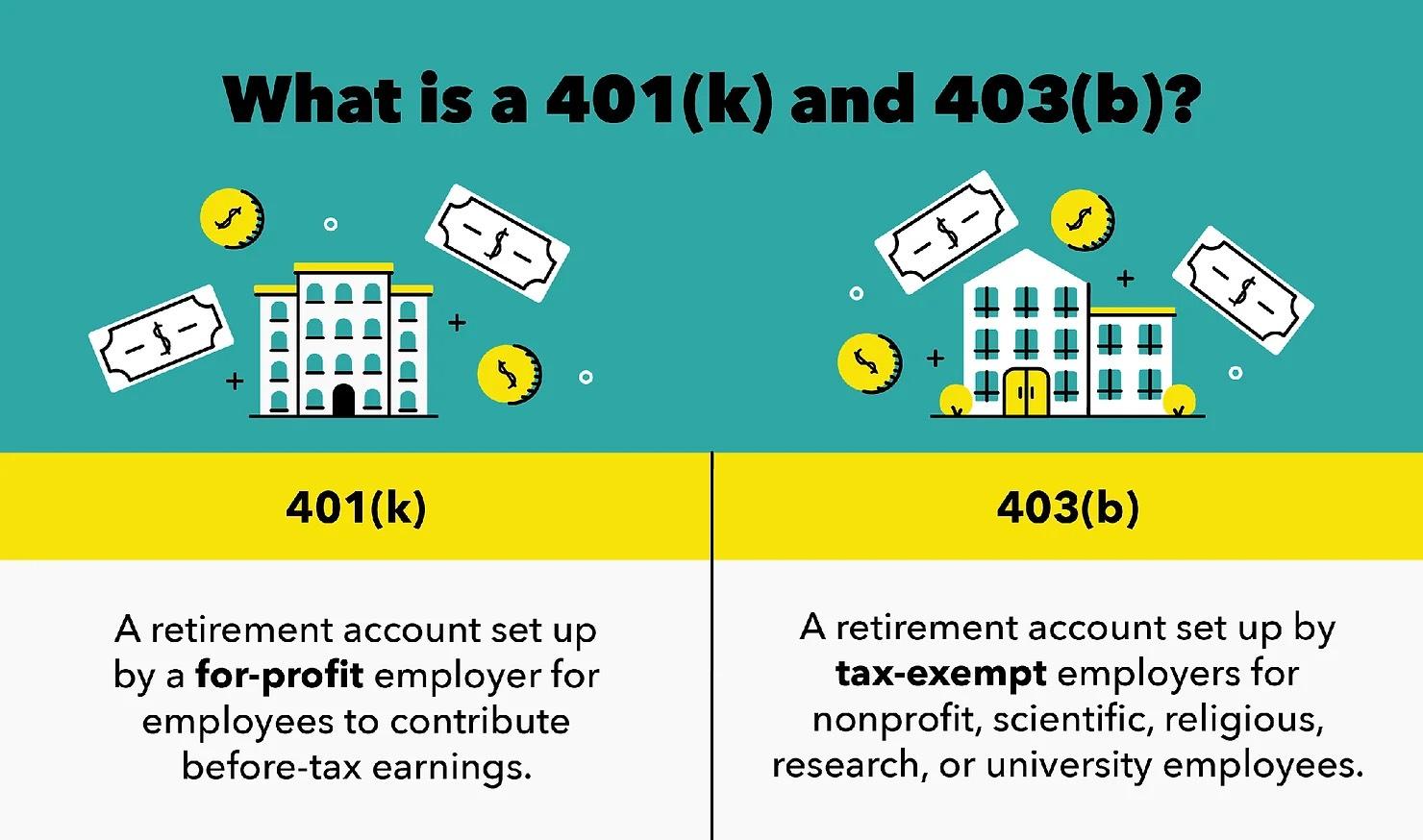
A 403(b) plan is similar to a 401(k), but it is only available for nonprofits.
One key advantage is that church-sponsored 403(b) plans don’t have to follow the fairness rules that apply to 401(k) plans. These rules are meant to ensure retirement plans don’t favor higher-paid employees too much, but they can create a lot of extra paperwork and restrictions. Since churches are exempt from these rules, they have more freedom to design a retirement plan that works best for their staff, without worrying about complicated tests or limits. Additionally, 403(b) plans tend to be a lot easier to set up and manage on an ongoing basis.
Image source: Mint/Intuit
The Housing Allowance Advantage
Licensed, ordained, or commissioned ministers can designate a portion of their income as a housing allowance. This allowance, up to certain limits, is not subject to federal income tax.
For example, if a pastor earns $60,000 per year and his church designates $20,000 as housing allowance, only the remaining $40,000 is subject to income tax. Not only does it lower the pastor’s overall tax bill, it also makes him more likely to qualify for certain income-based benefits.
By the way, if you are not already utilizing your housing allowance or unsure if you are able to, speak to your church and your tax professional right away!
But it gets better…
Housing Allowance in Retirement
Most pastors don’t know that housing allowance can extend beyond their employment years. Even in retirement, pastors can still claim housing allowance on withdrawals from their church-sponsored retirement accounts. This is a huge benefit!
For example, let’s say a pastor’s housing allowance retires and his church designates his housing allowance amount at $24,000/yr. This means that for his first year of retirement, he would be able to claim up to $24,000 of withdrawals from his church-sponsored 403(b) account as housing allowance and pay no income taxes (or Social Security and Medicare taxes) on those withdrawals. Even though he is no longer being paid by the church, he is withdrawing funds that were set aside in a church-sponsored retirement plan so he is still able to claim housing allowance on those funds.
Keep in mind that any withdrawals above the housing allowance amount would be subject to ordinary income taxes.
Making the Most of the Tax Benefits
It’s important to note that the tax benefits only apply to church-sponsored retirement accounts. If pastors have funds in IRAs or 401(k)s from previous secular jobs, a pastor is not able to claim housing allowance on those withdrawals. However, if a pastor made contributions to an IRA with money earned from his religious duties, he can transfer those IRA funds into a church-sponsored 403(b) account and gain the ability to claim housing allowance on those funds during retirement!
Triple Tax Advantage
By utilizing the housing allowance provision and contributing to a church-sponsored 403(b) plan, pastors can potentially achieve triple tax advantage: 1. contributions are income tax deductible 2. the growth of the funds inside the 403(b) is tax-deferred 3. withdrawals can be tax-free if designated as housing allowance within the allowed limits. So it is possible for a pastor to not pay any income taxes on his retirement savings at all!
This makes the church-sponsored 403(b) an even better vehicle than a regular IRA or even a Roth IRA.
Additional Tax Benefits
Contributions made by pastors to their 403(b) accounts also come with another perk. They are exempt from paying Social Security and Medicare taxes on those contributions. Considering that pastors are classified as self-employed and responsible for both the employer and employee portions of these taxes, this exemption can lead to significant savings.
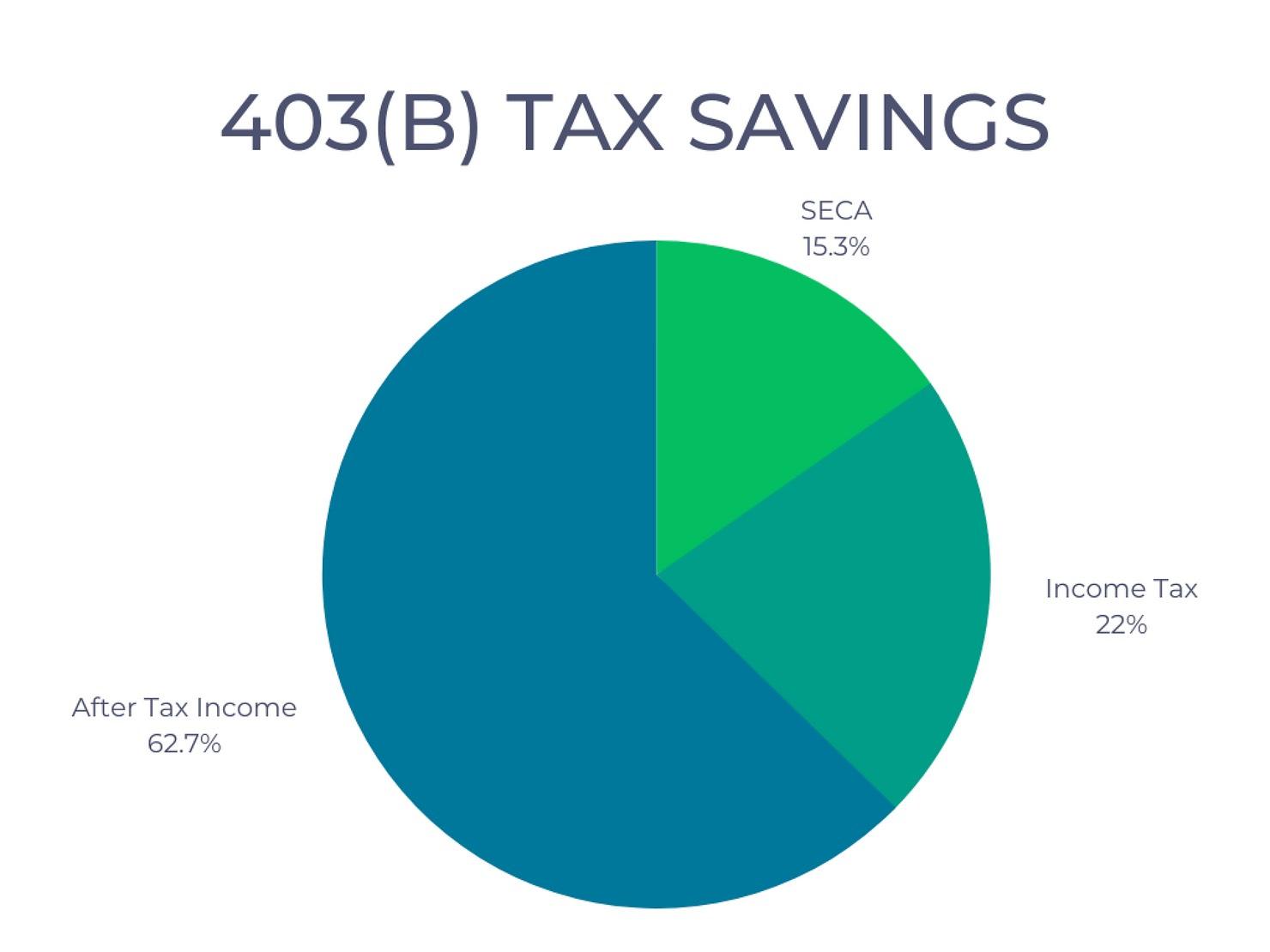
Hypothetical example: a pastor is in the 22% income tax bracket and pays 15.3% Social Security/Medicare tax on his income.
If he contributes $5,000 to his 403(b) account he is saving 37.3% ($1,865) in taxes!
Hypothetical example based on a pastor in the 22% income tax bracket.
Contribution Limits
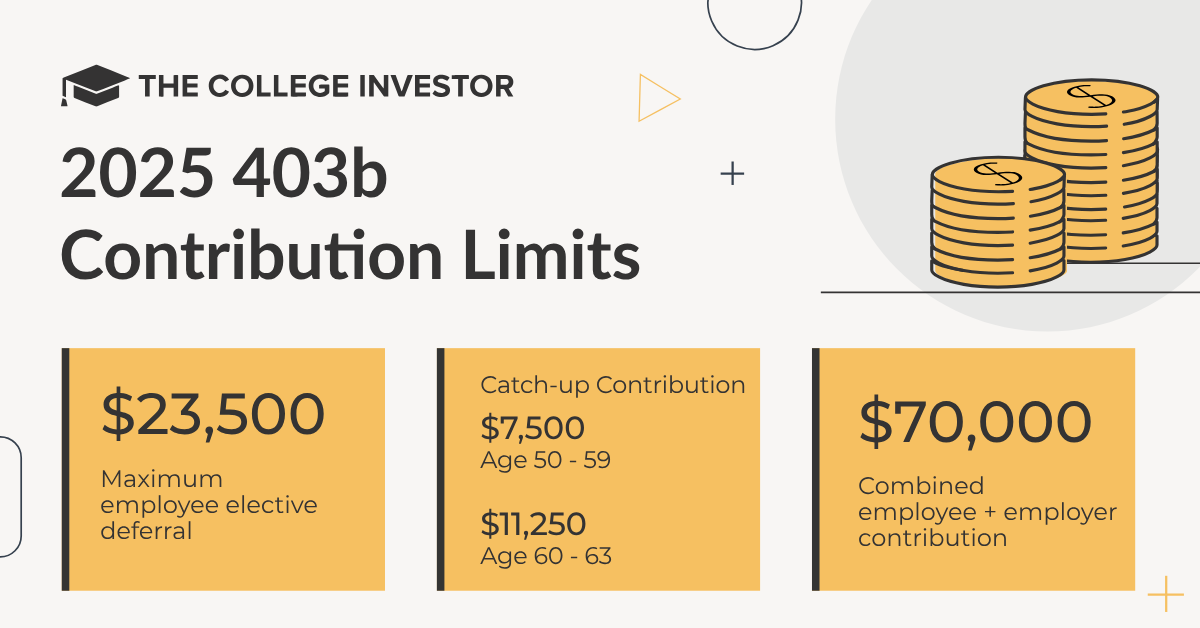
The contribution limits for church-sponsored 403(b) plans are higher than those for traditional IRAs or Roth IRAs. As of 2025, pastors can contribute up to $23,000 per year from their paychecks. Additionally, churches have the option to contribute to the pastor’s account as well. For 2025, the combined limit of employee and employer contributions is $70,000/yr!
Image source: thecollegeinvestor.com
On top of that, if you are age 50-59 or 64 or older, you can contribute an additional $7,500/year as a catch up contribution raising your individual limit to $31,000. Important note: beginning this year, if you are age 60-63 you can do an even higher catch up contribution of $11,250 raising your individual limit to $34,750.
While most pastors and churches will not come anywhere close to the yearly contribution limit it can be very useful in certain situations.
For instance, let’s say a pastor is getting ready to retire soon. He may want to increase his 403(b) contributions to “front load” his retirement and build up more tax-free income for later on.
Perhaps a church wants to give a substantial gift to a pastor in honor of an anniversary, or maybe it wants to give a lump sum ahead of retirement. Instead of cutting a check directly to the pastor (which would then be immediately taxable), the church may choose to contribute to his 403(b) plan instead and help the pastor save substantially on taxes.
Conclusion
The special tax provision for pastors through church-sponsored 403(b) plans offers unparalleled benefits. By maximizing the housing allowance provision and taking advantage of the triple tax advantage, pastors can save a significant amount on taxes and enjoy tax-free withdrawals in retirement.
If you have questions about setting up a 403(b) plan for your church, you can schedule a quick phone call with Nate here.
Important reminder: always consult with your tax professional when considering any of these steps. This is not tax advice, but rather areas of potential tax savings that you should be aware of.